
Summary: Specialised Investment Funds (SIF) are a new SEBI introduced investment category that bridges Mutual Funds and PMS/AIF. They offer advanced investment strategies, smaller minimum investment, greater flexibility, and a regulated structure, making SIF an interesting new investment product. Here is a deep dive into this new category.
Introduction to SIFs
Specialized Investment Funds (SIFs) are a new investment category introduced by SEBI from April 2025. SIFs are a part of the mutual fund framework and are launched by mutual fund AMCs. They bridge the gap between MFs and PMS / AIFs.
However, unlike traditional MFs, they allow more advanced investment strategies such as long-short positions, derivatives, and multi-asset allocation. They are designed for sophisticated investors and offer greater flexibility while maintaining the safety, transparency, and professional management of mutual funds. At the same time, they can potentially provide superior returns. Thus, SIFs act as a bridge between simple MFs and complex investment products, offering advanced strategies to investors with moderate investment capacity.
Why SIFs were introduced & their Positioning
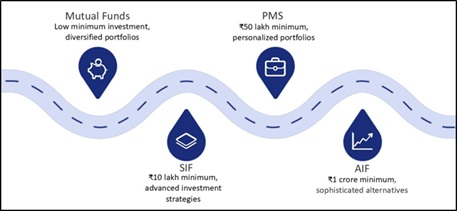
SEBI identified a significant gap in the investment landscape between accessible mutual funds and high-threshold alternative investment options. See Fig 1a.
Fig 1a – Positioning of SIFs
SIFs fill this gap by allowing investors to invest with a minimum of ₹ 10 lakh and access advanced investment strategies that were earlier available mainly to very wealthy investors.
Key Features of SIFs
The features of SIFs combine flexibility, advanced strategies, and professional management, making them an advancement compared to traditional MFs. See Fig 1b.
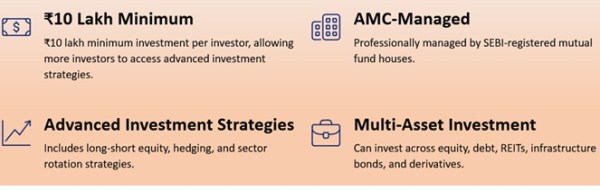
Investment Strategies in SIFs
The advanced strategies allowed in SIFs are detailed in Fig 1c.
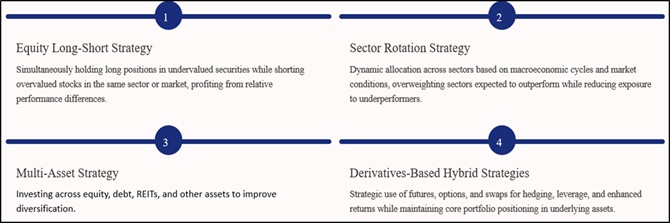
Fig 1c – Key Investment Strategies Used in SIFs
These strategies help SIFs generate returns in different market conditions by using both buying and selling opportunities. They provide better flexibility and diversification compared to traditional MFs.
How SIFs Work
We show an example shows how SIFs use a combination of long and short positions along with debt allocation to manage risk and generate stable returns in different market condition. See Fig 1d.
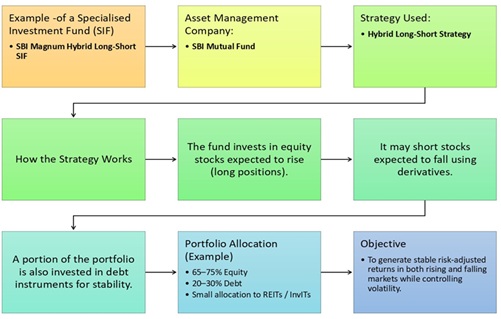
Fig 1d – Working Mechanism of a Hybrid Long-Short SIF Strategy
Similar Products Globally
• Hedge Funds (US & Europe) – Use advanced strategies like long-short and derivatives.
• UCITS Alternative Funds (Europe) – Regulated funds offering alternative strategies.
• Liquid Alternative Funds (US) – Mutual fund-like products using hedge-fund strategies.
Major AMCs that have launched SIFs in India
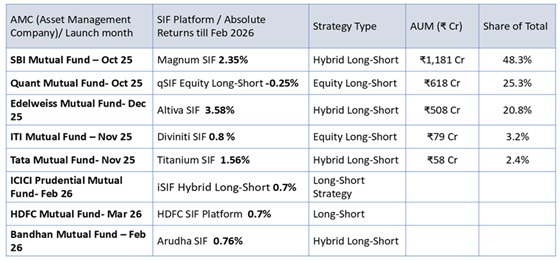
Fig 2 – Major SIF Funds, Returns, and AUM Distribution in India by Feb‘26
- Total Average AUM of SIF funds stand at ₹ 2,444 cr., indicating growing investor interest in this new investment category. Investments are highly concentrated, with nearly 94% of total assets allocated to the top three funds—Magnum SIF, qSIF, and Altiva SIF, showing a strong preference for established AMCs and long-short strategies. See Fig 2.
- Currently, several major AMCs such as SBI, Quant, Edelweiss, ICICI Prudential, HDFC, Tata, Bandhan, and ITI have launched SIF platforms. Most of these funds focus on long-short and hybrid strategies, which aim to generate better returns compared to traditional mutual funds by taking advantage of both rising and falling market conditions.
- The return data presented above is based on very short time periods. For funds like iSIF (ICICI Prudential) and Arudha SIF (Bandhan), the data reflects only recent performance (around a few days to one week). For funds such as Magnum SIF, Altiva SIF, and qSIF, the data covers approximately 3–4 months since launch.
Therefore, this data is not sufficient to evaluate long-term performance or fund quality, as SIFs are still in an early stage of development. All return figures and performance data have been sourced from respective fund factsheets and official disclosures.
New & Emerging SIF Players
- Franklin Templeton – Sapphire SIF – Long short – NFO running in Apr’26
- 360 ONE – New launch (2026)
- Bandhan MF – Arudha SIF
- ICICI Prudential MF – iSIF Platform
- Edelweiss MF – Altiva SIF
- Aditya Birla Sun Life MF – Entering SIF space
- Kotak Mahindra MF – Planning SIF launch
- Mirae Asset MF – Upcoming SIF
- Nippon India MF – Expected entry
- Abakkus / AlphaGrep – Alternative players entering SIF
We can see that SIF is still in an early stage, with only few active schemes launched by a few AMCs, but many large fund houses are entering, showing strong future growth potential.
SIF Monthly Report for Feb 2026
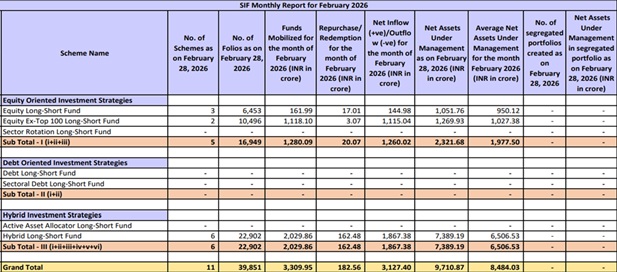
Fig 3 – SIF Monthly Report for Feb 2026 (Source: amfiindia)
As of Feb’26, SIF assets under management (AUM) stood at ₹ 9,710 cr., with nearly 76% allocated to hybrid long-short strategies, highlighting strong investor preference for diversified and flexible investment approaches. See Fig 3.
Regulatory Framework and SEBI Oversight
SEBI introduced SIFs to expand investment opportunities while maintaining strong investor protection and regulatory oversight. See Fig 4.

Fig 4 – Regulatory Framework and Key Features of SIFs
Investment Product Comparison
The following comparison illustrates where SIFs position themselves in India’s investment landscape across key parameters: See Fig 5.
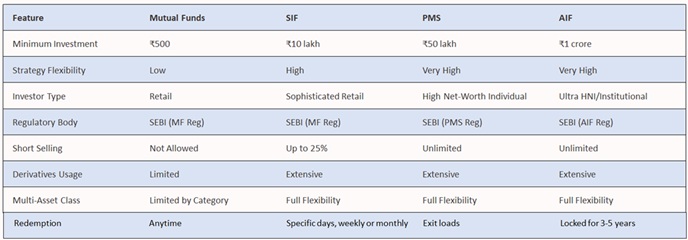
Fig 5 – Comparison of Investment Products
Advantages and Risks of SIFs
Advantages
- Higher Return Potential – Advanced strategies like long-short and derivatives can capture opportunities in different market conditions.
- Greater Flexibility – Fund managers have more freedom compared to traditional MFs.
- Access to Institutional Strategies – Investors can use hedge-fund-like strategies earlier available mainly through PMS or AIF.
- Better Diversification – Multi-asset investing across equity, debt, REITs, and derivatives reduces portfolio risk.
Risks and Considerations
- Returns – The returns from SIFs are not fixed and capital loss is possible.
- Derivative & Short Selling Risk – Advanced strategies can increase losses if not used properly.
- Complex Strategies – Requires good understanding of investment concepts.
- Manager Dependency – Performance depends on the fund manager’s decisions.
- Limited Liquidity – Redemption is allowed only on specific days in some SIFs.
- No Long Track Record – SIFs are a new product, so no long-term performance data is available. It’s not a proven product.
Future Outlook
- Growing investor awareness and demand for advanced strategies will drive SIF adoption.
- SIFs are expected to become a key bridge between mutual funds and PMS/AIFs in India.
- Increasing participation from large AMCs (HDFC, ICICI, Aditya Birla, etc.) will strengthen the market.
- As track records build up over time, investor confidence will increase.
- SIFs may see product innovation (new strategies, multi-asset models) in the coming years.
- Better regulatory clarity and disclosures will improve transparency and trust.
Conclusion
- SIFs represent an important evolution in India’s investment landscape by combining the regulatory strength of MFs with the flexibility of alternative investment strategies. They provide investors with access to advanced techniques such as long-short strategies, derivatives, and multi-asset allocation, which were previously limited to HNI’s with PMS and AIF products.
- While early data indicates growing investor interest and participation from major AMCs, SIFs are still in an early stage, with limited track record and evolving market acceptance. Therefore, careful evaluation and investor awareness remain essential.
- In the long run, with increasing adoption, regulatory support, and product innovation, SIFs have the potential to become a key investment category, offering a balanced approach between risk, return, and accessibility in India’s financial market.
- Contact JainMatrix for Research Analyst services.
PRICING AND PAYMENT OPTIONS
Disclaimers and Disclosures
- Punit Jain discloses that he has no ownership in any SIFs as of date mentioned in this report. Thus he has no known material conflict of interest as on date of publication of this report.
- This document has been prepared by JMI, and is meant for use by the recipient only as information and is not for circulation. This document is not to be reported or copied or made available to others without prior permission of JM. This report should not be considered or taken as an offer to sell or a solicitation to buy or sell any security. The information contained in this report has been obtained from sources that are considered to be reliable. However, JMI has not independently verified the accuracy or completeness of the same. Neither JMI nor any of its affiliates, its directors or its employees accepts any responsibility of whatsoever nature for the information, statements and opinion given, made available or expressed herein or for any omission therein. Investment in the securities market are subject to market risks. Read all the related documents carefully before investing. The suitability or otherwise of any investments will depend upon the recipient’s particular circumstances and, in case of doubt, advice should be sought from a RIA Registered Investment Advisor. Registration granted by SEBI to JMI, and certification from NISM in no way guarantee the performance of the Research Analyst or provide any assurance of returns to investors.
- JMI has been an equity investment adviser commercially since Nov 2012, and a SEBI certified and registered since 2016, under SEBI (Research Analysts) Regulations. Any questions should be directed to punit.jain@jainmatrix.com. Name of the RA as registered with SEBI – Punit Jain, SEBI Registration No. INH200002747. Logo/brand names –


Leave a Reply