Dr Lal Pathlabs IPO – Essential Services are an Essential Buy

  • Date 9th Dec 2015
  • Price range: Rs. 540-550 and application period: 8-10th Dec
  • Industry: Pharma – Diagnostic services
  • Mid Cap – Rs 4550 cr Mkt Cap 
  • Advice: Retail Investors can BUY with a 2-3 year perspective

Summary

  • Overview: DLP is provider of diagnostic and related healthcare tests and services.
  • DLP’s Revenue, EBITDA and EPS have grown at 29.2%, 29% and 33.9% CAGR over 4 years.
  • Key strengths are a proven, robust ‘hub and spoke’ model which allows consistent service levels and rapid growth. It is the #2 player in this space, with a strong North India presence. It has a good brand in this niche, which can be leveraged. DLP’s model is scalable; its reach can be expanded rapidly. Also it’s not a discretionary service, more like an essential service.
  • In terms of valuations, DLP has an asking PE of 54.5 times FY16 (P) which looks expensive. However we feel that the business can be valued closer to retail food services than hospitals.
  • As an investment, the DLP IPO is rated a medium risk, high return type of offering.
  • Opinion: Investors can subscribe to this IPO for a 2-3 year perspective.

Here is the investment note on Dr Lal Pathlabs (DLP).

IPO highlights

  • IPO is open from 8-10th Dec 2015 with Issue Price band: Rs.540-550 per share
  • Shares offered are 1.16 cr. of FV: Rs. 10 per share, and amount to be raised: Rs.638 cr. via OFS route. Shares offered as portion of equity post issue: 14.1%.
  • Market Lot: 20 shares and in multiples of 20 shares thereof.
  • There is a Rs 15 discount for Retail.
  • Objects of the issue: Promoters, promoter group and investors are exiting partially from their investments. No funds raised in IPO will benefit the company directly.
  • The promoter stake will reduce from 63.7% to 58.7% post IPO. Also the Pre IPO shareholding of the private investors/ VCs was 32.2% which would get reduced to 23.2% once the shares get listed.

Introduction

  • DLP is a Delhi based provider of diagnostic and related healthcare tests and services.
  • DLP had revenues, EBITDA and profits of Rs 662 cr, Rs 158.9 cr and Rs 95 cr. in FY15.
  • DLP’s network includes National Reference Lab in New Delhi, 171 clinical labs, 1,554 patient service centers and 7,000 pickup points. Network is all India, but unevenly spread, see Fig 1-2.
  • Customers include individual patients, hospitals, other healthcare providers and corporates.
  • DLP is staffed with 3,253 full-time employees and 83 full-time consultants (contractual).
  • DLP has built a national, “hub and spoke” network. Specimens are collected across multiple locations in a region for delivery to a designated clinical laboratory for centralized diagnostic It provides them with greater economies of scale and is the platform for good growth.
  • DLP provides has over 3,495 diagnostic and related healthcare tests and services including – Routine clinical lab tests (blood chemistry analyses and blood cell count), Specialized testing (histopathology, genetic marker, viral and bacterial cultures and infectious disease); and Preventive testing services (screenings for hypertension, heart disease and diabetes).
  • DLP was started by late Dr. Major S.K. Lal in 1949, by providing pathology services and maintaining a blood bank. The current leadership is Brig. Dr. Arvind Lal (CMD), Dr. Vandana Lal (Dir.), Dr. Om Prakash Manchanda (Dir & CEO) and Mr. Dilip Bidani (CFO).
  • The Pre IPO shareholding of private investor/ shareholders was 32.2% which would get reduced to 23.2% post IPO. Private equity/ VC investors like Wagner Ltd., WestBridge Crossover Fund, LLC and Sanjeevini Investment Holdings are associated with DLP.
  • The key strategy of DLP is to continue to expand their presence in the markets in which they operate and also into other markets in India through strategic acquisitions and partnerships.
  • For FY15, 72% of the revenues were from the Northern region. Currently the focus of the company is to strengthen and expand their presence in Central and Eastern India. A new large, regional reference laboratory is under construction in Kolkata.
Fig 1 - Revenue Segments, JainMatrix Investments

Fig 1 – Revenue Segments, JainMatrix Investments

Fig 2 – Service Network, Source DRHP

Business News and Updates

  • DLP had announced its plan to expand operations in Bengaluru through new centers and labs to reach a total number of 50 centers (from current 20) by Dec 2015.
  • BD India and DLP inaugurated a Centre of Excellence in Phlebotomy (blood collection, sampling) in June 2015. This center was launched to provide certified phlebotomy courses to healthcare professionals, and improving best practices for accurate and reliable diagnosis.
  • DLP had acquired Ashish Pathology Labs, a lab in Ahmedabad as part of its acquisition strategy to expand inorganically last year. It has been growing mainly through organic expansion. In northern, eastern and central India it has been adding 20-25 labs year on year.
  • As per DLP, “each lab costs around Rs 1 crore and there are additional investments in facilities like IT among others. Overall, we invest Rs 40-50 crore for our expansion every year”.
  • DLP has sample collection centers in 9 countries and plans to start in Africa with Nigeria.
  • Per latest data, DLP on day 2 of IPO is 2.65 times subscribed a sign of good success.

Industry Outlook

  • According to the World Health Organization (WHO), India’s total expenditure on healthcare was 4% of the GDP as of 2013. India trails both developed countries (USA, UK) and also developing countries (Brazil, Russia, China and Thailand) in healthcare spending % of GDP. This is due to the under penetration of healthcare services as well as partial govt. ownership.
  • As per CRISIL Research, the Indian diagnostics industry is at Rs 37,700 cr. in FY15. It will continue to grow by 16-17% CAGR over the next three years to over 60,000 cr. by FY18.
  • Demand drivers for the Indian diagnostic industry include:
    • Increase in evidence-based treatments; Changing disease profiles; big demand-supply gap;
    • Increase in health insurance coverage; Need for greater health coverage as population and life expectancy increase; Rising income levels make quality healthcare services affordable
    • Growing demand for lifestyle diseases-related healthcare services
  • Urban areas account for a higher proportion of revenues in diagnostics industry, as the urban population (28% of population) contributes 67% of revenues (CRISIL Research).
  • DLP trails only Fortis Healthcare controlled SRL in the diagnostics business. SRL had acquired Piramal Diagnostics to become the top player in the industry four years ago.
  • The Govt. accounted for 32.2% of healthcare spends in India (2013), a small increase in 10 yrs.

Financials of DLP

  • DLP’s Revenue, EBITDA and EPS have grown at 29.2%, 29% and 33.9% CAGR over 4 years.
  • This is excellent as it indicates that the business is in high growth mode. Even with increasing competition and declining margins, the performance looks good. See Fig 3.
Fig 3 - Pathlabs Financials, JainMatrix Investments

Fig 3 – Pathlabs Financials, JainMatrix Investments

  • However H1FY16 results were disappointing and the projected EPS for FY16 is Rs 10.1, whereas it was Rs 11.5 for FY15. This is a negative sign. Note FY16P data is a simple doubling of H1 data, also accounting for one time/ exceptional charges related to IPO.
  • Currently DLP has zero outstanding borrowings as well as term loans. This is a big plus from the financial perspective. DLP has the option to raise funds in future if required.
  • The operating margins have declined to 24% from 25.5% in 2012. However the profit margins have improved from 12.4% in 2011 to 14.3%. But Profit margins fell in H1FY16 to 9.2%.
  • DLP’s operations have been both operating and free cash flow positive since 5 years. This is positive. But there is a declining trend due to increasing investments in the business. Fig 4.
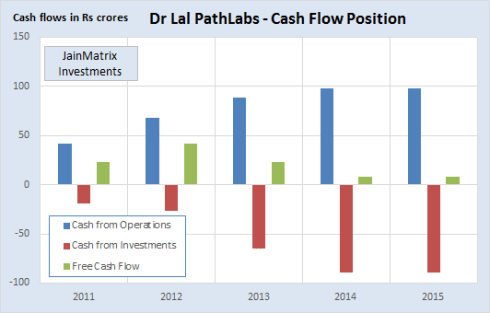
Fig 4 - Cash Flow, JainMatrix Investments

Fig 4 – Cash Flow, JainMatrix Investments

Positives for Dr Lal Pathlabs and IPO:

  • DLP financials have shown strong growth in 4 years. DLP has been acquiring small medical labs to grow inorganically. Such growth is also sustainable.
  • DLP has a strong footprint in the North. Expansion in South & East will give a further impetus.
  • They have built a good brand in diagnostics which is likely to strengthen in the near future.
  • DLP uses a ‘Hub and Spoke’ business model, which allows consistent service levels and rapid growth.
  • Experienced leadership team includes professionals with strong industry expertise and track record.

Internal Risks

  • The Dr Lal PathLabs brand is fundamental to their business, and any failure to maintain the quality of their diagnostic healthcare services provided could affect their business.
  • Business interruptions at DLP’s National Reference Laboratory may also affect operations.
  • DLP’s business depends on franchisees and business partners. Any non-performance by them may adversely affect DLP. Some of their lab operations are undertaken jointly with third parties, whose interests may differ from DLP’s, and such arrangements entail certain risks.
  • DLP leases the majority of its laboratories and other business premises. They might not be able to renew any such leases on favorable terms, and costs will rise.
  • DLP is subject to seasonal fluctuations in operating results and cash flows. Diagnostic healthcare testing volumes typically increase during the monsoon season and experiences slower business during Dec-Jan, when the temperature and humidity are lower.
  • For DLP, the employee benefit expenses have risen sharply over the last 5 year reflecting shortages in medical / doctor staff. If this accelerates, it can impact profitability.

External Risks

  • DLP operates in a competitive business environment which has low barriers to entry.
  • Diagnostics business is still dominated by unorganized local centers rather than large chains.
  • The business is subject to a variety of central and state govt taxes and surcharges, and any increase in tax rates — such as GST, could adversely affect their financials.
  • Political instability or disruptions at locations where they operate can affect business.

Benchmarking

Exhibit 5 - Benchmarking, JainMatrix Investments

Exhibit 5 – Benchmarking, JainMatrix Investments

We compare DLP with hospital chains as well as retail focused service companies:

  • DLP emerges quite strongly across parameters like margins, growth, and return ratios.
  • It does not lead the pack on the valuation parameters.
  • Based on this it appears that the valuations of DLP may fall somewhere between established hospital chains and the leading retail service business.

Overall Opinion

  • India with its large and growing population is stretched in terms of available healthcare facilities. Expenditure in this sector will trend upwards. Govt’s (free) facilities cater to the low end of market.
  • In this space, DLP’s diagnostic and healthcare services provide an essential, high demand service. Its not a discretionary service, more like an essential service.
  • The business model is robust and scalable, and there are clear benefits of a national chain over small and local service providers.
  • DLP has a good brand and solid service delivery in the North, where it is established. We believe that DLP will be able to grow and roll out a national (urban) footprint. The next target would be semi urban and rural areas. There is massive potential to grow over the next 10 years.
  • In terms of valuations, DLP has an asking PE of 54.5 times FY16 (P) which looks expensive. However we feel that the business can be valued closer to a retail food service than a hospital. DLP’s model is scalable; its reach can be expanded rapidly.
  • As an investment, the DLP IPO is rated a medium risk, high return type of offering.
  • Retail Investors can BUY this IPO with a 2-3 year perspective.

READ AND DOWNLOAD THE ENTIRE REPORT

Here is a note on the Dr Lal Pathlabs IPO in PDF format.

JainMatrix Investments_Dr Lal PathLabs IPO_Dec 2015

Click the link above to open/ download the PDF document.

JAINMATRIX KNOWLEDGE BASE 

See other useful reports

  1. Alkem Labs IPO
  2. Goods And Services Tax (GST): Integration And Efficiency
  3. Indigo IPO – Flying High, Wide And Handsome
  4. Café Coffee Day IPO – Very Hot Coffee 
  5. Syngene IPO: Good Pharma R&D spinoff from Biocon.
  6. Navkar Corp IPO – Location Challenges – Avoid
  7. CPSE ETF – Unlocking Value, Slowly
  8. JainMatrix IPO Reports deliver 60.5% returns

Search for companies/ sectors of your interest in Search box in the right panel.

Visit and Like JainMatrix FB or Follow on JainMatrix Twitter for reports

Do you find this site useful?

  • Visit the Investment Servicepage to find how you can get more. Or Click LINK
  • Register Now to get our Free reports and much more, on the top right of this page, or by filling this Signup Form CLICK.

Disclaimer

This document has been prepared by JainMatrix Investments Bangalore (JM), and is meant for use by the recipient only as information and is not for circulation. This document is not to be reported or copied or made available to others without prior permission of JM. It should not be considered or taken as an offer to sell or a solicitation to buy or sell any security. The information contained in this report has been obtained from sources that are considered to be reliable. However, JM has not independently verified the accuracy or completeness of the same. JM has no known financial interests in Dr Lal Pathlabs Ltd. or any related firm. Neither JM nor any of its affiliates, its directors or its employees accepts any responsibility of whatsoever nature for the information, statements and opinion given, made available or expressed herein or for any omission therein. Recipients of this report should be aware that past performance is not necessarily a guide to future performance and value of investments can go down as well. The suitability or otherwise of any investments will depend upon the recipient’s particular circumstances and, in case of doubt, advice should be sought from an independent expert/advisor. Any questions should be directed to the director of JainMatrix Investments at punit.jain@jainmatrix.com

Alkem Labs IPO

Dear Reader,

The IPO season in India continues with another bunch of offerings planned in December 2015.
We have created a new IPO report on Alkem Labs.
It is the first large pharma company IPO in over 10 years.
Its got a lot going for it. At the same time, the criticism can be on the grounds of high valuations, litigation, low exports proportions, etc.

We’ve had good success with our IPO reports, and at one time provided readers 60.5% returns within one year on our recommended IPOs.

Starting this IPO, we will restrict some of our IPO reports to our Subscribers for the Investments Service. However we share with you the IPO highlights:

IPO highlights

alkem labs, jainmatrix investments

  • IPO is open from 8-10th Dec 2015 with Issue Price band: Rs.1020 -1050 per share
  • Shares offered in IPO are 1.29 crores of Face Value: Rs.2 per share
  • Minimum lot size: 14 shares and multiples of 14 thereof.
  • Shares offered as portion of equity post issue: 10.75% approx.
  • Amount proposed to be raised: Rs.1350 crores via OFS route.
  • There is no fresh issue. The promoter stake would reduce from the existing 70.9% to 66.2% post IPO.
  • Objects of the issue: Promoters, promoter group and investors are exiting partially from their investments. No funds raised in IPO will benefit the company directly.

Good luck and happy investing,

Punit Jain

JAINMATRIX KNOWLEDGE BASE:

  1. A View on the Indian Rupee
  2. Goods and Services Tax (GST): Integration and Efficiency
  3. Power Sector – A Complex Challenge
  4. The Roads Sector – Is it a Revival?
  5. The Slide of Oil – Positive for the Economy
  6. A PSU firm with a projected 80% gain in 2 years (premium content)
  7. Indigo IPO – Flying High, Wide And Handsome
  8. Cafe Coffee Day IPO – Very Hot Coffee
  9. Auto Ancilliary Small Cap (premium content)
  10. CPSE ETF – Unlocking Value, Slowly
  11. IPO Reports deliver 60.5% returns
  12. Large Cap and Mid & Small Cap Portfolio reports (premium content)
  13. Seven Short Steps to Long Term Investing Success

DO YOU FIND THIS SITE USEFUL?

  • Visit the Investment Service page to find how you can get more. Or Click LINK
  • Register Now to get our Free reports and much more, on the top right of this page, or by filling this Signup Form CLICK.

Disclaimer

This document has been prepared by JainMatrix Investments Bangalore (JM), and is meant for use by the recipient only as information and is not for circulation. This document is not to be reported or copied or made available to others without prior permission of JM. It should not be considered or taken as an offer to sell or a solicitation to buy or sell any security. The information contained in this report has been obtained from sources that are considered to be reliable. However, JM has not independently verified the accuracy or completeness of the same. JM has no known financial interests in Alkem Laboratories or any related firm. Neither JM nor any of its affiliates, its directors or its employees accepts any responsibility of whatsoever nature for the information, statements and opinion given, made available or expressed herein or for any omission therein. Recipients of this report should be aware that past performance is not necessarily a guide to future performance and value of investments can go down as well. The suitability or otherwise of any investments will depend upon the recipient’s particular circumstances and, in case of doubt, advice should be sought from an independent expert/advisor. Punit Jain has applied for certification under SEBI (Research Analysts) Regulations, 2014. Any questions should be directed to the director of JainMatrix Investments at punit.jain@jainmatrix.com

A View on the Indian Rupee

THOUGHT FOR THE DAY:

The Indian rupee has been weakening against the USD over time. The graphic provides one month and 5 year charts.

Charts

ExchangeRateHistory

INR to USD rates (chart credits dollars2rupees.com) 

The 5 year low for INR was 67.09 to a dollar hit in Aug 2013, in the wake of the USA Quantitative tightening scare. At that time our USD reserve holdings were low, and the market went through a period of panic and uncertainty. Thereafter, we have seen a steadiness of the INR, even though it continues to weaken against USD. We are now just 1% away from this past low.

If we look at this 5 year period, we can see that the INR weakened in this period by 47.69% absolute. This translates into 9.54% simple average, and 8.11% CAGR weakening per year.

Exchange Factors

The exchange rate is a complex function of factors such as:

  1. Trade deficit in India. Net investments including FII and FDI, remittances and outflows.
  2. Fiscal performance of Indian government.
  3. Inflation and GDP growth.
  4. Forex reserves, risk perceptions and trade outlook.

INR Outlook

  • The rise in interest rates indicated by the US Fed for Dec 2015 is another important event. If it comes through (it’s been postponed several times) it will result in some USD flowing back to USA to earn higher returns with low risk.
  • But overall India is well placed to defend its currency. On most of the factors named above, India is doing better now than in the past 5 years. My feeling is that the INR weakening of 8.1% CAGR seen in recent years should slow down to 4-5% over the next 5 years.
  • Exports from India remains an important theme in our investment portfolios, given the small base and massive potential. Sectors riding this theme are IT services, pharma and auto ancillaries.

JAINMATRIX KNOWLEDGE BASE:

See other useful reports:

DO YOU FIND THIS SITE USEFUL?

  • Visit the Investment Service page to find how you can get more. Or Click LINK
  • Register Now to get our Free reports and much more, on the top right of this page, or by filling this Signup Form CLICK.


GST: Integration and Efficiency

THOUGHT FOR THE DAY:

GST is in the news a lot these days. Lets look at this new initiative in a little detail:

What is GST in India?

GST (Goods and Service Tax) is a comprehensive indirect tax that would be levied on manufacture, sale and consumption of goods and services at a national level. It will replace multiple taxes like CENVAT, central sales tax, state sales tax, octroi, etc. It would be levied whenever a consumer buys goods or services.

The government plans to roll out GST from April 1, 2016. Much depends on the legislative discussions and approvals. The delay in recent years in passing the GST bill has been in part due to political wrangling between the parties in power at the center, and the opposition.

efficiency

Benefits and impact of GST?

The tax sharing formula is such that big consumer states such as UP, West Bengal and Kerala will get a high share of the taxes, while the producer states such as Tamil Nadu, Maharashtra and Gujarat may lose out on revenues. To compensate, the bill provides for 1% extra tax on goods for at least two years. This extra revenue will go to the producer state. When introduced, GST will not only make the tax system simpler, but will also help increased compliance, boost tax revenues, reduce the tax levies on consumers and make exports competitive.

GST will boost the pan-India market by eliminating inter-state tax paperwork, delays in checks on state orders and stabilize prices across regions. Experts expect this to lift the country’s GDP by 1-2%.

What would be exempt from GST?

Petroleum products, potable alcohol and tobacco have been kept out of the purview of the GST. The center and the states have agreed to restrict number of exemptions to 100. All the goods and services not in this list would be taxed.

Sectors that will benefit:

  • We feel that FMCG, pharma, power sector, logistics and auto and auto ancillaries would be the sector gainers from GST implementation.
  • More than any specific sector, we feel that GST getting legislative approvals would be a confidence booster for the markets and a reforms related achievement for the central government.

JAINMATRIX KNOWLEDGE BASE:

See other useful reports:

DO YOU FIND THIS SITE USEFUL?

  • Visit the Investment Service page to find how you can get more. Or Click LINK
  • Register Now to get our Free reports and much more, on the top right of this page, or by filling this Signup Form CLICK.


Power Sector – A Complex Challenge

THOUGHT FOR THE DAY:

The Power sector of India presents a complex set of challenges. On one hand there is no doubt that a 6-8 % growth in GDP also needs 10% growth in power supply. On the other hand, many plants set up recently are not able to supply power. Lets look at the challenges:

  • Power generation capacity – is not the main challenge. Recent programs by GoI have resulted in good and sufficient capacity increases.
  • Power distribution firms weak – The Discoms are short of funds. State wise decisions like low tariffs, free power to agriculture, T&D losses, etc have rendered discoms weak financially.
    • Power Minister Piyush Goyal announced a scheme for turning around discoms , reeling under a combined debt of more than Rs 4.2 lakh crore. Under the scheme, called the Ujwal DISCOM Assurance Yojana (UDAY ), the states will take over 75% debt of their discoms and, in return, get leeway to borrow more. So there is a ray of hope for discoms.
  • T&D losses are huge: Per a recent report almost 25% of the power generated is lost, and never gets billed for — double the global average of about 12%. This problem needs a combination of political will and tough implementation/ law and order, to plug leakages.
Embed from Getty Images
  • Fuel linkage issues: Power plants are set up, but the fuel, be it gas or coal, is not supplied in good quantity or at the right price. New Gas supply expected from Indian E&P firms has not materialized. High LNG prices till end 2014 rendered it uneconomic for power sector.
    • The GoI is attempting to solve this for Coal by setting up agreements between Coal India and large important consumers. Coal India has also increased production recently, improving supplies and reducing the need to import coal.
    • LNG gas scenario may change rapidly after the Qatar Gas – Petronet LNG renegotiation. Spot LNG prices in Asia have also fallen 50% in the last one year.
  • Power evacuation: Some states and regions are surplus in power, and others deficit. Not enough has been invested in a good power grids. Southern states are power deficit.
    • The govt. is inviting bids for transmission projects worth Rs 12,000 crore soon, to address the congestion in supply lines to South and East India.
  • Pollution: Power gen through fossil fuels also creates air pollution and particulate matter.
    • Renewables – solar and wind power, are getting a massive stimulus by government that is trying to build the solar generation ecosystems and is targeting a deployment of 20,000 MW of grid connected solar power by 2022.

From an investment perspective, we are positive on a few firms from the Power – Transmission & Equipment pack.

With the recent economic slowdown, we sense that even though the power deficit has reduced, many consumers are still facing power cuts and poor quality power supply. Lets hope that these new initiatives by the government address and resolve the problems in the power sector.

JAINMATRIX KNOWLEDGE BASE:

See other useful reports:

DO YOU FIND THIS SITE USEFUL?

  • Visit the Investment Service page to find how you can get more. Or Click LINK
  • Register Now to get our Free reports and much more, on the top right of this page, or by filling this Signup Form CLICK.


The Roads Sector – Is it a Revival?

Thought for the Day:

Roads a very important sector for modern India. But India’s road sector had been stagnating since 2012, hit by both an economic slowdown and private sector disinterest. The famed PPP model had yielded poor results. A number of projects were delayed or in financial distress.

Cut to 2015, and the story may have changed. Of about 77 road projects that were languishing with the roads ministry, 34 have been shut down and rebid; 18 have been revived using govt. money, and the remaining 25 are under revival discussions. A number of decisions were taken:

  1. The govt. will award 10,000 kms of roads for construction this year by Mar 2016. That’s a far cry from 2013 when the central government could only award 1,300 kms.
  2. The govt. has also gone back to the basics and instead of a complex Public Private Partner-ship (PPP) model, has reverted to the simpler EPC model. Here the construction of the road is executed by the private firm, but funded by the govt.
  3. The govt is infusing Rs 4,000 crore to complete projects stalled due to lack of funds. In Feb this year, the govt. had decided to invest Rs 80,000 cr. in the road sector in the annual budget.
  4. The govt. will allow private developers to exit projects two years after tolling starts. After exiting, they can also apply for 80 public private partnership (PPP) projects.
Roads (JainMatrix Investments)

Roads (JainMatrix Investments)

These decisions are expected to rapidly stimulate this sector. Road transport and highways minister Nitin Gadkari is upbeat about the “transformation” of India’s road network. The NHAI too is undergoing reforms, for faster approvals and project revivals.

Watch out for shares of infrastructure companies into the roads and construction space like KNR Constructions, RPP Infra, Sadbhav Engineering, IRB Infrastructure, Ashoka Buildcon, Jaypee Infra, IL&FS Transportation, GMR Infra, Lanco Infra, IVRCL, Ashoka Buildcon, etc. which are likely to benefit due to these new initiatives.

JAINMATRIX KNOWLEDGE BASE:

See other useful reports:

DO YOU FIND THIS SITE USEFUL?

  • Visit the Investment Service page to find how you can get more. Or Click LINK
  • Register Now to get our Free reports and much more, on the top right of this page, or by filling this Signup Form CLICK.

The Slide of Oil – Positive for the Economy

Thought for the Day:

India has been an oil importing country for many years, and imports over 70% of the crude requirement. The ray of sunshine this year has been the fall in oil crude prices globally.

Oil prices (oil-price.net), jainmatrix investments

Oil prices (oil-price.net)

This 60% fall in import costs (see Fig above) will translate into over $70 billion ( Rs 4,55,000 crore) of forex savings this year.

  • These savings are spread across consumers (lower prices at the pump), businesses (lower fuel, raw material and transportation costs) and government (lower deficits, higher tax incomes through raised rates).
  • Domestic inflation too has fallen.
  • A fall in crude oil prices is particularly beneficial for sectors that use crude and crude derivatives as a raw material. Stocks of sectors such as paint, tyre, FMCG, airlines and lubricants will remain in focus.

There is of course a flip side to this fall. The Indian Oil and Gas industry suffers some disruptions. Within the industry, the Exploration and Production (E&P) firms are badly hurt as their production revenues were pegged to global crude prices. Some taxes and commissions for retailers based on percentage of price have fallen. 

Embed from Getty Images

But overall India gains tremendously from crude fall. These low crude prices may also continue as the outlook for crude oil prices still looks subdued. The OPEC cartel looks weak. Crude oil production is high. And big growth in renewable and green power sources like solar and wind industries may replace oil demand over time.

JAINMATRIX KNOWLEDGE BASE:

See other useful reports:

DO YOU FIND THIS SITE USEFUL?

  • Visit the Investment Service page to find how you can get more. Or Click LINK
  • Register Now to get our Free reports and much more, on the top right of this page, or by filling this Signup Form CLICK.