Shyam Metalics and Energy IPO – will Rise and Shine

  • Date: 12th June 2021
  • Small Cap: ₹7,800 cr. Mkt cap
  • Sector –  Steel industry
  • IPO Opens 14-16th Jun, at ₹303-306/share
  • Valuations: P/E – 12.8, EV/EBITDA – 8.1
  • Advice: SUBSCRIBE

Summary:

  • The global steel cycle is on an upswing. Global and domestic demand for steel is rising, and many India based steel plants are running at good capacity utilizations.
  • SMEL have a good financial strength, low debt, fair cash and ability to invest in their balance sheet.
  • Integrated operations, proximity to RM sources, in house power generation and captive railway sidings build into a low cost operating model, which is good in a commodity industry.
  • Growth plans are good including new products launch and doubling of mfg. capacity over 5 years.
  • This IPO will also help SMEL to reduce debt and strengthen the balance sheet for planned growth.
  • Key risks are 1) dip in steel cycle or Indian steel prices 2) high competition 3) steel price control by GoI 4) Rising iron ore and power costs.
  • Opinion: Investors can SUBSCRIBE to this IPO with a 1-2 year perspective.

JainMatrix Investments Service – PRICING OPTIONS

IPO Offering highlights

  • The IPO opens from 14-16th Jun 2021 in a Price Band of ₹303-306 per share
  • Total IPO size is ₹909 cr. of 2.97 cr. shares, about 12% of the equity shares. The IPO includes a fresh issue of ₹657 cr. and an Offer for Sale (OFS) of the remaining value, making up 0.82 cr. shares.
  • The lot size is 45 shares and Face Value is ₹10 per share.
  • Objects of the offer: Table 1: The Fresh Issue of up to ₹657 cr. will be utilized in following manner:
Particulars  Amount which will be financed from Net Proceeds Estimated Utilisation of Net Proceeds in Fiscal 2022
Repayment and/or pre-payment of debt of Company and SSPL, one of its Subsidiaries470 cr.470 cr.
General corporate purposes187 cr.187 cr.
  • The promoters own 100 % in SMEL which will fall to 88.35% post-IPO.
  • The IPO share quotas for QIBs: 50%, Non-Institutional Investors 15% and Retail is 35%.
  • In the grey market, the price of SMEL is at ₹436, a 42% premium to IPO price.  

Do read our insightful research, we attach the complete Investment report in PDF format here.

Disclaimer

This document has been prepared by JainMatrix Investments Bangalore (JM), and is meant for use by the recipient only as information and is not for circulation. This document is not to be reported or copied or made available to others without prior permission of JM. It should not be considered or taken as an offer to sell or a solicitation to buy or sell any security. The information contained in this report has been obtained from sources that are considered to be reliable. However, JM has not independently verified the accuracy or completeness of the same. JM has no stake ownership or financial interests in SMEL or any group company. Punit Jain intends to apply for this IPO. Neither JM nor any of its affiliates, its directors or its employees accepts any responsibility of whatsoever nature for the information, statements and opinion given, made available or expressed herein or for any omission therein. Recipients of this report should be aware that past performance is not necessarily a guide to future performance and value of investments can go down as well. The suitability or otherwise of any investments will depend upon the recipient’s particular circumstances and, in case of doubt, advice should be sought from an Investment Advisor. Punit Jain is a registered Research Analyst under SEBI (Research Analysts) Regulations, 2014. JM has been publishing equity research reports since Nov 2012. Any questions should be directed to the director of JainMatrix Investments at punit.jain@jainmatrix.com.

A Portfolio of Good Medicine

Dear Investors,

Which Industry, other than IT Services, is India globally competitive?

In which industry are Indian products of high quality and reasonable cost on a global scale?

Which is the sector likely to do extremely well given today’s uncertainties?

The answer is – the Indian Pharma Sector.

JainMatrix Investments identified the pharma sector as attractive as the nation turns its attention to healthcare, hospitals and vaccines.
The Indian pharma firms have also been in focus globally, and the gates are opening slowly for these firms to win new markets, supply drugs & medicines and discover new cures.

We have made a report, Indian Pharmaceutical Sector – Good Medicine. Our report covers the following:

  • The progress of Indian pharma.
  • Why this sector is at an inflexion point in terms of global growth
  • Why this industry is globally competitive
  • The large cap and mid cap firms of interest
  • We benchmark a selection of the firms on financial parameters, across Large cap and Mid cap players. We sieve through them to find the preferred picks.
  • We map the share price performance of these firms over several years.
  • We provide a high quality portfolio of six firms of the Sector, 3 from large caps and 3 from mid caps, for investors.

Offer of the Month

  • Buy the JainMatrix Investments annual subscription for a special offer @ ₹15,999 (normal rates ₹16,999)
  • Get the Indian Pharma Sector report free along with the Welcome Kit and high performing Model Portfolios.
  • It includes a whole year of guidance on direct equity investing in Indian Markets. This offer is valid only for May 2021 as a special summer offer. See details
  • To take this offer, transfer in above offer amount on https://jainmatrix.com/payment-options/
  • Send a SMS message – Summer of ’21 Pharma offer/ your name to 9886110032.
  • Give us a day or two to contact you to start.

Happy investing !!

Regards,

Punit Jain – Founder, JainMatrix Investments

Disclaimer – While the offer is open in May ’21, we reserve our rights and may decline it in case our marketing objectives are not fulfilled.

How will you start?

upstox says

Sounds good, but

Not Sure?

Don’t take a Chance

– 8 years track record in equities

– Buy the quality stocks of 3 portfolios:

– Large Cap, Mid & Small Cap, Satellite

– One year Subscription for help & guidance

Click on PRICING AND PAYMENT OPTIONS to start right away !!

DISCLAIMER

JainMatrix Investments based in Bangalore (JMI) is an independent equity research firm started by Punit Jain. Content in this website should not be considered or taken as an offer to sell or a solicitation to buy or sell any security. Investors should consult their financial advisers if in doubt about whether the product is suitable for them. JainMatrix Investments has been an equity investment adviser commercially since Nov 2012, and is a SEBI certified and registered Research Analyst under SEBI (Research Analysts) Regulations, 2014. Any questions should be directed to him at punit.jain@jainmatrix.com

GREAT INVESTING WISDOM / 23 lessons I learned

23 lessons I learned on my path from $0 to $2M in 8 years / Mar 14, 2021

Here is an excellent tweet. Thanks Danny Baldus-Strauss @BackpackerFI. I’ve added my commentary.

Danny Baldus-StraussMy Thoughts
1. “Play long term games with long term people” @naval Anything that provides instant gratification is probably bad for you and your wealth. Anything that provides delayed gratification is likely good for you. There’s no such thing as “get rich quick” or “overnight success”  
Truly agree.
2. “Focus on the $10K+ questions, not the $5 ones.” @ramit Spend time focusing on the big decisions like asset allocation & building good credit rather than the $5 Starbucks decisions. Set an hourly rate for yourself. Outsource everything that’s under that rate to save time.  
Lets say you earn Rs 60,000/month. That’s 2,000/day or 250/hour. Outsource any work or task if it can be done for less than 150/hr.
3. Invest early and often. Time in the market > timing the market Consistency is the name of the game. Automate everything. Sometimes investing can be boring and that’s a good thing. Early on, investing more and often is far more important than yield or portfolio performance.  
In investing, smaller and earlier is better than later and more.
4. Learn to avoid lifestyle inflation. You really do need less than you think, trust me. Get out in nature, and you’ll see. Freedom + time are worth much more than nice cars and clothes. Keep your lifestyle flat even as you get promoted and make more. Invest the difference.  
5. You can get rich at your job, but you only get wealthy at home. 9-5s build necessary cash flow to consistently invest. But your employer isn’t responsible for your wealth building, you are. You are the director, try to do things every day that build your future.
 
6. Live in the present, while still building and planning for the future. The point of having $ is to not have to worry about having $. If you’re miserable while building wealth, you’ll be miserable when wealthy. If $ is all you think about, you’ll miss the present moment.  
Or Rupees
7. “You’ll never get wealthy renting out your time” @naval  9-5s can be great and necessary tools for building financial independence. But have an exit plan if you truly want freedom over your time and energy. For every 9-5, you have an entrepreneur to thank for your job.
9-5 is important to learn skills. To do things. But you are doing them for others. At some point, you should start doing things for yourself.
8. “Cut expenses in areas you don’t care about so that you can spend extravagantly in areas you do” @ramit You don’t need to live frugally your entire life to become wealthy. Cut out what doesn’t bring you immense joy and don’t feel guilty for splurging on things that do.
 
9. “Every action is a vote for the type of person you wish to become” @JamesClear  Your net worth is a lagging indicator of your financial habits of the past few years. Start now by “placing votes” every day for the financial future you desire. Habits compound just like your $.
 
10. “Money’s greatest intrinsic value is its ability to give you control over your time” @morganhousel Time and freedom is what you’re after. Nice things, looks, social validation … they all fade away. Time does too, but at least you can control it through financial freedom.
 
11. Generating income is more important than cutting expenses, but it’s a balance. Cutting expenses has a floor, you can only cut out so much. Generating income has no ceiling. Promotions, side gigs, investments, and business ownership have no limits, only you.
Stock market investing too has no ceiling. Rs 500 invested in 5 stocks can lose you Rs 500. They can also gain you Rs 10,000 (over a long time).
12. Mind, body, and business are connected. Wealth starts in the mind. Being broke is also a mindset and identity. Healing what’s in your mind, becoming aware of your limiting beliefs and toxic thoughts, & taking care of your body, spills over into business and wealth.
 
13. Be an optimist. Being a pessimist rarely lines your pockets. This doesn’t mean it’s ok to be reckless and ignore risk. But envision a better future and invest in it. The point of maximum fear is the point of maximum opportunity. “Be greedy when others are fearful”.
This is so important. Long back I used to be hopeless and negative. But positivity can be learned and practiced. I do it.
14. Invest in your greatest asset – You! I’ve invested tens of thousands in my own education, retreats, and men’s groups. The ROI has been incalculable. Don’t be cheap when it comes to your self-improvement. You are your only asset that is truly recession proof.
Always keep learning. Asking. Reading. And changing.
15. Money is made in the waiting. Sometimes good investing can be boring. Sometimes it’s more about the stomach than the brain. Sometime it’s more about inaction than action. Tune out the noise and play the long game.
 
16. Volatility is not the same as risk. It’s the price you pay to outperform. And it’s a mechanism that “transfers wealth from those who can’t handle it to those that can” @BrianFeroldi
 
17. “Focus on the future – not as in the next year, or even 3 years, but as in the next decade, or even two decades. Focus on the world-changing trends that will occur, irrespective of recessions, boom and busts, interest rates, even wars.” @OphirGottlieb
This is hard. Its uncertain. But so important.
18. “Only when the tide goes out do you discover who’s been swimming naked” @WarrenBuffett  It’s only after crashes and bubbles pop that people realize how over-leveraged they were. It’s only after one loses a lot of money that they realize how much needless risk they took.
It surely takes several cycles of boom and bust to really get this.
19. The way to create life changing returns is to hold onto your winners. You want to be in great companies in the first inning, out by the 7th. Pay up for quality and only invest in the very best businesses.
True about Long Term Investing.
20. Tune out the noise Financial media makes money on your fear. People on TV or on social media have very different backgrounds, risk tolerances, time horizons, and amounts invested than you. Take it all with a grain of salt and stick to YOUR plan and what works for YOU.
Note that People on TV or SM may have very different incentives than you. Why should they help you become wealthy? Are your objectives aligned?
21. Realize that stocks take the stairs up and the elevator down. Risk can come in a flash when you least expect it. So use the good times to plan for the bad times. Expect the best, but prepare for the worst.
 
22. “You do not rise to the level of your goals, you fall to the level of your systems” Goals help with process, but it’s your systems that allow you to make real progress. Set up your investing rules, create a non-negotiable morning routine, automate your finances.
 
23. “People who are right a lot of the time are people who often change their minds” @JeffBezos  Don’t get married to your stocks or portfolio. Embrace conflicting opinions to understand the other side. Humility is key. It’s ok to be wrong, but staying wrong is even worse.
Its true, of course. But I’m still grappling with this. This also means that whatever I know is always up for discussion, and can also become wrong sometime.

DISCLAIMER

This document has been prepared by JainMatrix Investments Bangalore (JM), and is meant for use by the recipient only as information and is not for circulation. This document is not to be reported or copied or made available to others without prior permission of JM. Punit Jain is a registered Research Analyst under SEBI (Research Analysts) Regulations, 2014. JM has been publishing equity research reports since Nov 2012. Any questions should be directed to the director of JainMatrix Investments at punit.jain@jainmatrix.com.

The new, colourful Satellite Stocks Basket Mar 2021

We wish our readers a very safe and happy Holi !! 

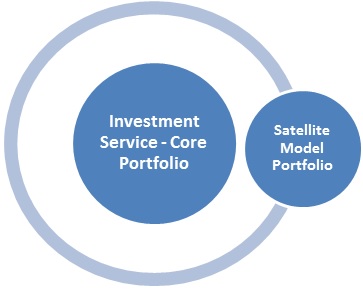
On this occasion, we are proud to launch our refreshed – Satellite Model Stocks Basket.

JainMatrix Investments has had super success with Model Stocks Basket over the last 9 years. Our experience of researching over 100 firms in this period has thrown up a number of exciting opportunities.
Particularly in this post Covid economy, we see several exciting opportunities from beyond the CORE – LC or MSC stock baskets.

With this, we have relaunched the Satellite Model Stocks Basket. This has the following characteristics: It has 7 High Quality Investment Ideas with a 6-12 months minimum Investment Horizon.

This is an independent, Multi-Cap Portfolio with firms from different sectors.

This Opportunistic portfolio is chosen on the basis of deep fundamental research and High Conviction by the JainMatrix Research Analyst.

As Subscribers, you will receive the list of 8 stocks and introduction notes outlining them and providing the key reasons why we like them. We will also monitor and maintain this Stocks Basket and guide you on your Investment. 
In addition Subscribers will receive exclusive access to high quality investment reports, including

  1. Market Trends and event notes
  2. IPO/ FPO/ OFS/ NFO reports based on opportunities.
  3. Periodic updates on the Satellite Stocks Basket with any change in stocks if required.
  • The subscription will be initiated with a welcome call for introductions and Service detailing.  
  • Email and WhatsApp based queries can be addressed to JainMatrix Investments on the recommended stocks, portfolios and Investment Decisions
  • The Satellite Stocks Basket Service is a part of the JainMatrix Investment Service.
  • Pricing can be checked on Pricing and Payment Options page. 

Our Investment Service (Stocks Baskets) has fetched outstanding results over this period.
Here’s to your Happy and profitable investing.

Regards,
Punit Jain 
JainMatrix Investments, Bangalore

DISCLAIMER

This document has been prepared by JainMatrix Investments Bangalore (JM), and is meant for use by the recipient only as information and is not for circulation. This document is not to be reported or copied or made available to others without prior permission of JM. It should not be considered or taken as an offer to sell or a solicitation to buy or sell any security. The information contained in this report has been obtained from sources that are considered to be reliable. However, JM has not independently verified the accuracy or completeness of the same. Neither JM nor any of its affiliates, its directors or its employees accepts any responsibility of whatsoever nature for the information, statements and opinion given, made available or expressed herein or for any omission therein. Recipients of this report should be aware that past performance is not necessarily a guide to future performance and value of investments can go down as well. The suitability or otherwise of any investments will depend upon the recipient’s particular circumstances and, in case of doubt, advice should be sought from an Investment Advisor. Punit Jain is a registered Research Analyst under SEBI (Research Analysts) Regulations, 2014. JM has been publishing equity research reports since Nov 2012. Any questions should be directed to the director of JM at punit.jain@jainmatrix.com.

The Indian Stock Markets’ 20 year Digital Transformation

Indian Stock Markets

It was about 20 years ago. I asked a relative about the stock markets. I got mixed stories.

On one hand 2-3 of their investments had done well and doubled in a few years.

On the other hand there were stories of (the Challenges)

  1. share values falling to almost zero, there were missing promoters or company locked in litigation
  2. difficult stock brokers. To know a good broker was rare. They were bullies, took your share and sold it and gave you money after a month; the transaction was opaque; you would be lucky if you only paid 4-5% commission on transactions.
  3. The stock market was famous for scams aplenty. The Harshad Mehta scam (1992), the Ketan Parekh Scam, the Satyam Scam, Saradha Scam and NSEL Scam, among other swirling stories of manipulation and operator driven shares naturally made outsiders wary. BSE had been in existence for a long time, and this was the nature of the market.
  4. A stock market transaction had a high degree of difficulty and uncertainty.

But it had piqued my interest. So a few years later when a new private bank offered me a website based stock broking account as an add on to the savings account, I went ahead and opened it.

Over the next few years, we saw a number of Equity Market Changes:

  1. The NSE came into existence with a digital trading offering
  2. Equity Shares began getting dematerialized. Once they were in Demat form, trading could be on the digital platform, quickly and cheaply
  3. SEBI as regulator began controlling and monitoring the sector’s progress
  4. A number of stock brokers came into existence, and with competition, broking commissions became reasonable.
  5. BSE and NSE had good digital backbones, so trading moved online
  6. The Mutual Fund industry took off, offering a simple entry level product for new investors
  7. Soon enough, the Equity Advisory, PMS and even AIF industries and products became available.

The digital transformation has dramatically changed Stock Market access, monitoring and information flow.

With these Equity Market industry changes, the nature of services available to the customer changed. The above Challenges were addressed:

  1. Share prices are still volatile. Some firms do fail/ go bankrupt. However, it does not happen in an information vacuum. We can track companies better today. Conversely, excellent companies do see good share price appreciation.
  2. Stock broking accounts can be opened easily. Transactions are easy, robust and transparent. Commissions are lower and competitive. Stock brokers are now much better, customer friendly and professional.
  3. Our Securities system has improved. The digital transformation has dramatically changed access, monitoring and information flow. Every scam perhaps made the system stronger eventually, as the loopholes found were blocked, (and hopefully that problem should not happen again). Of course there is no guarantee that there will not be another scam, but the stock market is a much safer place now.
  4. A stock market transaction is easily done now on websites, accessible from your PC, laptop, by phone call and even using mobile apps.

So a lot of people from my generation were afraid of the stock markets. The stories they heard from their friends and relatives were scary. Some people lost a lot of money and swore to never touch the sector again. However my message to them is:

Today the Indian Stock Markets are a very good Wealth option to all.

Its not too late. Take the plunge, and explore the stock markets for your wealth protection and appreciation.

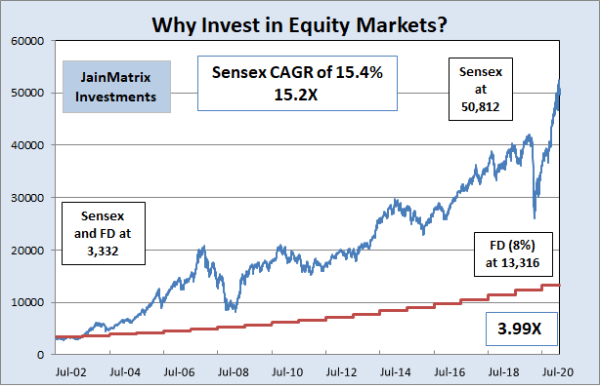
To substantiate this, I present a simple 20 year graph of the SENSEX index

In this graph, one can see the performance of a Fixed Deposit (at 8% interest) versus the Sensex, in both absolute value and in the form of multiples.

Real Estate

The traditional Indian Wealth option has been Real Estate. People bought Land, apartments and commercial property, and waited for it to appreciate. Or developed it, and very often reaped excellent returns. For many years it appreciated very well.

Then came a couple of changes in the real estate sector:

  1. GST was brought in to track and tax real estate transactions
  2. RERA Act was brought in to make builders professional, accountable and transparent. It has been changing the way they work. Customers may finally have some protection or recourse now from builder slippages. However several builders could not change and adapt to the new rules, and may have scaled down or even closed.
  3. Several initiatives against black money have made real estate transactions more ‘white’ than they have ever been in the past.
  4. Today even after some correction, we can see that a buy v/s rent decision, for a city apartment, is still unbalanced. The EMI for an apartment purchase (with loan) is much higher than the rental cost for a similar property. In most mature markets abroad, the EMI and Rent are close or in some balance with each other.
  5. All this has resulted in a Time and Price correction in the real estate sector across categories. We can see that today this is still playing out. As a result:

Real Estate is no longer the default Wealth option it once was. Do try other options.

In 2020, 55% of adults in the United States invested in the stock market. Today in India, this is just 2%.

This is not going to change overnight for India, but as awareness builds, individuals must try and nibble at stock markets and educate themselves on its potential.

I have managed to do OK with my website based stock broking account. I became a full time investment professional in 2012. My firm JainMatrix Investments offers an equity advisory service to help invest in the stock markets. See our SERVICE DETAILS section.

Do revert to me if you have any questions on above article.

Regards,

Punit Jain

Founder, JainMatrix Investments

Glossary: I often use standard terms or shortforms so here is some explanation:

  • PMS – Portfolio management service
  • AIF – Alternative Investment Fund
  • EMI – Equated Monthly Installments, as in repayment for a loan
  • GST – Goods and Services Tax
  • RERA Act – link

DISCLAIMER

This document has been prepared by JainMatrix Investments Bangalore (JM), and is meant for use by the recipient only as information and is not for circulation. This document is not to be reported or copied or made available to others without prior permission of JM. It should not be considered or taken as an offer to sell or a solicitation to buy or sell any security. The information contained in this report has been obtained from sources that are considered to be reliable. However, JM has not independently verified the accuracy or completeness of the same. Neither JM nor any of its affiliates, its directors or its employees accepts any responsibility of whatsoever nature for the information, statements and opinion given, made available or expressed herein or for any omission therein. Recipients of this report should be aware that past performance is not necessarily a guide to future performance and value of investments can go down as well. The suitability or otherwise of any investments will depend upon the recipient’s particular circumstances and, in case of doubt, advice should be sought from an Investment Advisor. Punit Jain is a registered Research Analyst under SEBI (Research Analysts) Regulations, 2014. JM has been publishing equity research reports since Nov 2012. Any questions should be directed to the director of JainMatrix Investments at punit.jain@jainmatrix.com.

Indian PetroTaxes, the Dharam Sankat – A Solution

Introduction

In this public interest article, JainMatrix Investments ideates on the Oil & Gas sector. In India, currently the retail prices of petrol & diesel are at all-time high. On 16th Feb’21, petrol cost ₹ 89.29/liter in Delhi, while diesel cost ₹ 79.70/L. In some parts of India, like Raj. and MP, petrol crossed the ₹100/L mark for the first time. This is of concern to the retail consumer. There is also a cascading effect of diesel prices impacting transportation, and truck rental and bus / taxi prices are rising.

Background

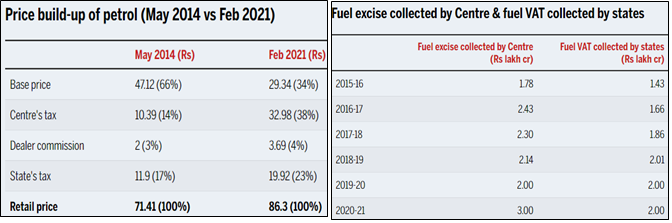
These products are not covered under GST, which has set tax slabs. The price build-up of petrol can be well understood from Fig 1. Govt. of India (GoI) has increased taxes on petrol & diesel over 5 years, to raise revenues, discourage excessive use & promote usage of environment friendly Electric Vehicles, see Fig 2.

Fig 1 – Price Build up of Petrol, Fig 2 – Excise and VAT (Source ToI)

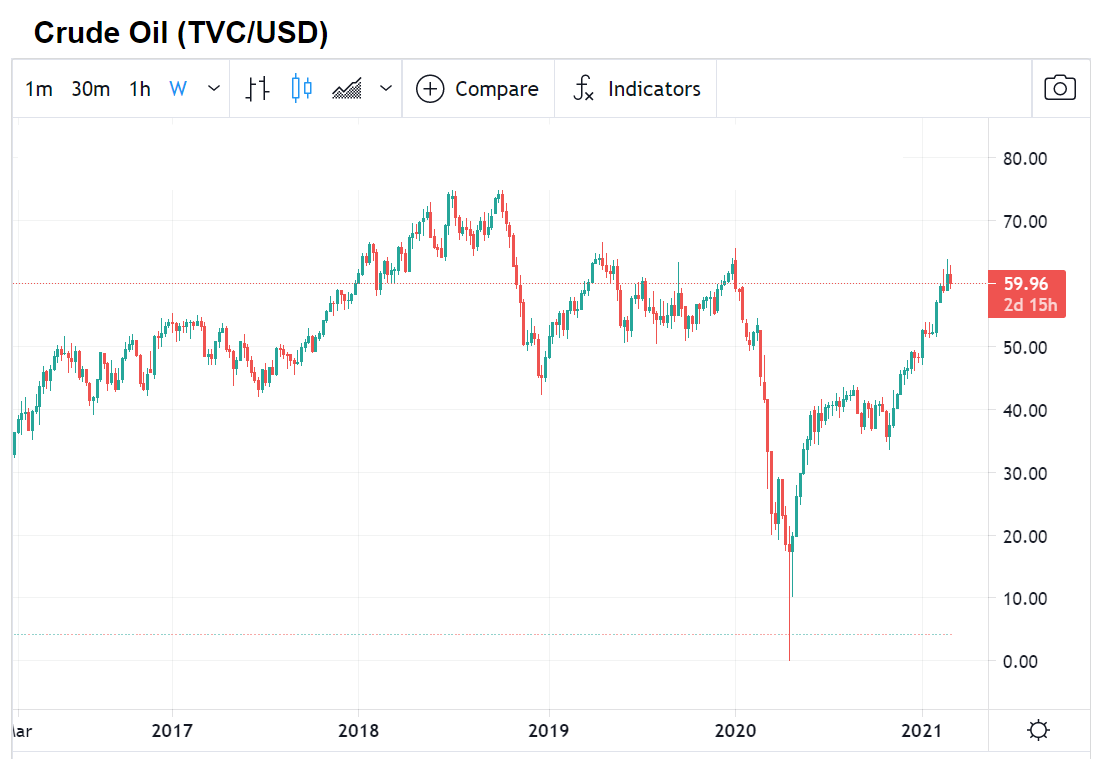
Volume and Crude price volatility: Due to pandemic effect, the sales volume of diesel reduced by 10 M tons compared to the previous year. Crude prices also fell steeply as global demand fell, see Fig 3. To meet the budgeted FY21 Tax collection of ₹ 16.35 lakh cr., GoI had to raise excise duty on petrol by ₹13/L and on diesel by ₹16/L in two tranches. By Sept-Oct 2020, crude prices rose again, and Indian retail prices have risen to new highs.

Thus the problem is that collection of taxes (state VAT & center’s Excise Duty) is fixed by GoI assuming fixed base prices & sales volume of petrol & diesel. These 2 main factors contribute to petro price volatility: 1) Crude prices 2) Sales volumes.

The Finance Minister has referred to this situation as a ‘Dharam Sankat’. We have a Suggestion.

Fig 3 – Crude Prices (Source: TradingView)

Suggestion

  • This problem can be resolved by having monthly resets of Excise and VAT from petrol & diesel.
  • Thus the Union Excise Duties budget of ₹ 3.61 lakh crore (assumed from petrol & diesel) can be taken as ₹ 30,083 cr. /month. Similarly states’ VAT.
  • Every month, the VAT and Excise charges per liter can be modified to meet the monthly budget, based on last month’s collections, and petro sales volumes. Any monthly variance of collections from budget can be rolled over and made up in next month, so that the budget is achieved.
  • Naturally the states and center need to coordinate for the monthly tax reset task. Perhaps the infra is already in place, as PSU firms change prices rapidly when crude prices change.

Benefits

  • This system allows an auto correction of tax levels – excessive tax collection one month results in lower taxability next month so that over 2 months the budget is maintained. And vice versa.
  • As the Indian economy recovers, we feel that petro product consumption volumes will rise. The above system will trigger lower per liter prices in this scenario.  
  • It’s important that the GoI does not excessively tax petrol and diesel, and stay within budget, while also recognizing that petro products are an important way for GoI to control deficits post the covid year.

DISCLAIMER

This document has been prepared by JainMatrix Investments Bangalore (JM), and is meant for use by the recipient only as information and is not for circulation. This document is not to be reported or copied or made available to others without prior permission of JM. It should not be considered or taken as an offer to sell or a solicitation to buy or sell any security. The information contained in this report has been obtained from sources that are considered to be reliable. However, JM has not independently verified the accuracy or completeness of the same. JM has no known financial interests in any of these firms. Neither JM nor any of its affiliates, its directors or its employees accepts any responsibility of whatsoever nature for the information, statements and opinion given, made available or expressed herein or for any omission therein. Recipients of this report should be aware that past performance is not necessarily a guide to future performance and value of investments can go down as well. The suitability or otherwise of any investments will depend upon the recipient’s particular circumstances and, in case of doubt, advice should be sought from an Investment Advisor. Punit Jain is a registered Research Analyst under SEBI (Research Analysts) Regulations, 2014. JM has been publishing equity research reports since Nov 2012. Any questions should be directed to the director of JM at punit.jain@jainmatrix.com.